cat. no. TESTOSTERONE-ENANTHATE
Testosterone enanthate: dosage, half-life and storage
Androgen (esterified testosterone, injectable depot)
also: Delatestryl / Xyosted / Test E / Test Enanthate
By An NayalLast reviewed 5 sources
At a glance
On this card (9)
What it is
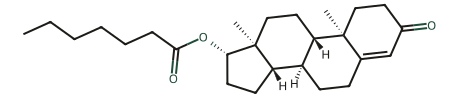
Testosterone enanthate is testosterone with a fatty-acid ester (enanthate) attached, dissolved in oil and injected into muscle or, in the XYOSTED autoinjector, under the skin. The oil forms a small depot that releases the hormone slowly as the body clips off the ester, so one shot keeps working for days to weeks instead of the minutes plain testosterone would last. Its terminal half-life is commonly cited around 4.5 days - a non-human-primate pharmacokinetic study measured about 4 to 5 days - which is why the intramuscular label doses it every 2 to 4 weeks for hypogonadism. Levels are not flat: larger injections spaced further apart give higher early peaks and lower late troughs, which is the trade-off behind the weekly XYOSTED schedule and the more frequent split-dose schedules people use.
The molecule
2D structure · PubChem record, redrawn
Dose ranges
Study-backed ranges carry a source you can open. Community ranges are widely reported but not clinically established - treat them as what people do, not as advice.
Male hypogonadism replacement (testosterone enanthate injection USP label, Hikma)
study50-400 mg
intramuscular, once every 2 to 4 weeks
Subcutaneous weekly autoinjector, starting dose (XYOSTED label)
study50-100 (starting dose 75) mg
subcutaneous, once weekly
Community-reported weekly TRT protocol (split dosing to smooth peaks and troughs) - community-reported, not clinically established
community100-200 total per week, commonly split into 2 injections of 50-100 mg
intramuscular or subcutaneous, once or twice weekly
Storage
Reconstituted
Store at 20 to 25 C (68 to 77 F), USP Controlled Room Temperature, per the labels (XYOSTED permits excursions to 15 to 30 C). The product is a pre-made sterile oil solution, not a powder for reconstitution. Warming the vial and gently rolling (not shaking) helps if the oil has thickened when cold.
Ships as a known-concentration oil in a 10 mL multi-dose vial (200 mg/mL), drawn with a syringe - nothing to reconstitute.
Work out your draw volume in the calculatorTools for Testosterone enanthate
Stacks and pairings
Interactions & cautions
The testosterone enanthate injection label directs checking hemoglobin and hematocrit periodically for polycythemia in patients receiving high doses of androgens, since testosterone can raise red-cell mass; the XYOSTED subcutaneous label is more specific, directing that hematocrit be evaluated approximately every 3 months. Testosterone is converted to estradiol by the aromatase enzyme, and large testosterone peaks increase the substrate available for aromatization, which a 2026 primary-care review links to breast tenderness, fluid retention, or mood changes in susceptible patients (Farzam, 2026). Larger injections given at longer intervals produce higher early peaks and lower late troughs, while weekly dosing reduces that instability (Farzam, 2026). Exogenous testosterone suppresses the hypothalamic-pituitary-gonadal axis, lowering endogenous testosterone and sperm production and impairing fertility; concomitant hCG can help preserve it (Fink et al, 2024). The label notes androgens may decrease the requirement for oral anticoagulants, so warfarin patients need close monitoring when androgens are started or stopped. Due to sodium and water retention, edema with or without congestive heart failure may be a serious complication in patients with pre-existing cardiac, renal, or hepatic disease. It is contraindicated in men with carcinoma of the breast or with known or suspected carcinoma of the prostate (label).
Questions people ask
What is the half-life of testosterone enanthate?
Commonly cited at roughly 4.5 days. A pharmacokinetic study in non-human primates measured a terminal elimination half-life of about 4 days (cynomolgus) to 5 days (rhesus) (Weinbauer et al, 1990). The US intramuscular label does not print a separate ester half-life - it lists only testosterone's own very short half-life of 10 to 100 minutes - so the multi-day figure comes from the ester's slow release from the oil depot.
What is the labeled dose for low testosterone?
The intramuscular testosterone enanthate label states 50 to 400 mg every 2 to 4 weeks for replacement in the hypogonadal male. The XYOSTED subcutaneous autoinjector starts at 75 mg once a week. These are reported label figures, not personal medical advice - testosterone is a Schedule III controlled substance and dosing is a prescriber's decision.
Why do people split it into weekly or twice-weekly injections?
Because levels swing. Larger injections given at longer intervals produce higher early peaks and lower late troughs, while weekly dosing reduces that instability (Farzam, 2026) - the same logic behind the once-weekly XYOSTED schedule. Smaller, more frequent injections are a community practice aimed at flattening those peaks and troughs; the intramuscular label schedule is every 2 to 4 weeks, not weekly.
Does testosterone enanthate affect fertility?
It can suppress it. Chronic exogenous testosterone inhibits the hypothalamic-pituitary-gonadal axis, lowering endogenous testosterone and sperm production and impairing fertility (Fink et al, 2024). Concomitant hCG can help preserve fertility in men on testosterone therapy - discuss any fertility plan with a clinician.
How is it stored?
At room temperature, 20 to 25 C (68 to 77 F), per the labels, with XYOSTED allowing brief excursions to 15 to 30 C. It ships as a ready-to-use sterile oil, not a powder you reconstitute; if the oil is cold and thick, warming and gently rolling the vial helps.
Sources
- [1]Testosterone Enanthate Injection, USP - Prescribing Information (DailyMed, Hikma Pharmaceuticals USA)labelStrength 200 mg/mL; hypogonadism dose 50-400 mg intramuscular every 2 to 4 weeks; storage 20-25 C; periodic hemoglobin/hematocrit checks for polycythemia at high androgen doses; androgens may decrease oral anticoagulant requirement (close warfarin monitoring); edema warning; contraindicated in carcinoma of the breast and known or suspected carcinoma of the prostate; testosterone's own half-life stated as 10 to 100 minutes.
- [2]XYOSTED (testosterone enanthate) injection, for subcutaneous use - Prescribing Information (DailyMed, Antares Pharma)labelAutoinjector strengths 50, 75, and 100 mg per 0.5 mL; starting dose 75 mg subcutaneously in the abdomen once weekly; evaluate hematocrit approximately every 3 months; store at 20-25 C with excursions permitted to 15-30 C; contraindicated in men with breast or prostate carcinoma and in pregnancy.
- [3]Weinbauer GF et al. Pharmacokinetics and pharmacodynamics of testosterone enanthate and dihydrotestosterone enanthate in non-human primates (Acta Endocrinol, 1990) PMID 2333732studyIn orchidectomized cynomolgus monkeys, mean terminal elimination half-life of testosterone enanthate was about 4 days; in GnRH-agonist-suppressed rhesus monkeys it was about 5 days - the pharmacokinetic basis for the commonly cited multi-day (~4.5-day) enanthate half-life. Non-human primate data.
- [4]Farzam K. Individualizing Injectable Testosterone Replacement Therapy in Primary Care: Pharmacokinetics, Symptom Stability, Safety Monitoring, and Injection Frequency (2026, PMC13262958) PMID 42292725studyTestosterone is converted to estradiol by aromatase, and large testosterone peaks increase substrate for aromatization, contributing to breast tenderness, fluid retention, or mood changes; larger injections at longer intervals produce higher early peaks and lower late troughs, while weekly dosing reduces this instability; hematocrit should be checked at baseline, after initiation or dose changes, then periodically.
- [5]Fink J, Ide H, Horie S. Management of Male Fertility in Hypogonadal Patients on Testosterone Replacement Therapy (2024, PMC10890669) PMID 38399562studyChronic exogenous testosterone inhibits the hypothalamic-pituitary-gonadal axis, impairing endogenous testosterone and sperm production and causing male infertility; concomitant hCG can prevent or diminish this suppression and helps maintain fertility in men on TRT - the basis for the fertility and hCG notes.
What we could not verify
The US labels do not print a numeric enanthate ester half-life: the Hikma intramuscular label states only testosterone's own half-life of 10 to 100 minutes, and the XYOSTED Clinical Pharmacology section does not quote a mean elimination half-life. The ~4.5-day figure used for the ester model is anchored to the primate PK study (Weinbauer et al 1990, PMID 2333732), which measured a terminal elimination half-life of ~4 days (cynomolgus) to ~5 days (rhesus) in non-human primates; a directly measured human enanthate half-life in days was not located in an open-access primary source this task, and published human clinical citations commonly range from ~4.5 to ~8 days. The aromatization-to-estradiol and peak-trough claims rest on the Farzam 2026 review (PMC13262958) rather than an enanthate-specific label statement. The community weekly/split TRT range (100-200 mg per week split into 2 injections) is self-reported practice, not the labeled intramuscular schedule (every 2 to 4 weeks) and not clinical guidance. fda.gov and accessdata.fda.gov were not used (blocked). All dose figures here are reported facts with a source, not a recommended personal dose - testosterone enanthate is a US Schedule III controlled substance.
Keep reading
Pepteca is for education and information only. It does not provide medical advice, diagnosis, or treatment, and its calculators perform unit math only. Always verify with a licensed provider before starting, changing, or stopping any protocol. Many peptides are not approved for human use and may be regulated differently where you live.