cat. no. ANASTROZOLE
Anastrozole: dosage, half-life and storage
Selective non-steroidal aromatase inhibitor (AI)
also: Arimidex
By An NayalLast reviewed 3 sources
At a glance
On this card (9)
What it is
Anastrozole (brand name Arimidex) is an aromatase inhibitor - it switches off the enzyme, aromatase, that turns testosterone into estrogen (estradiol). Its only FDA-approved job is treating hormone-receptor-positive breast cancer in postmenopausal women, at 1 mg once a day. In the TRT world it gets used off-label for a different reason: injected testosterone partly converts to estradiol, and some men use a small dose of anastrozole to pull that estradiol back down. The single most important thing to understand is that estradiol is not the enemy in men. It is essential - it protects bone density, drives libido and erections, and helps keep cholesterol in a healthy range. Push it too low and you get joint pain, a flat sex drive, bone loss, and worse lipids. A careful study in healthy men (which used anastrozole itself to lower estradiol) showed that as estradiol dropped, body fat went up and sexual desire suffered, and a companion analysis showed bone loss once estradiol fell below roughly 10 pg/mL - all independent of how much testosterone was around. That is why the mainstream position has shifted against routine or aggressive AI use on TRT: many men on well-dosed testosterone never need one, and reaching for anastrozole to chase a 'low' estradiol number often trades a harmless number for real symptoms. Anastrozole also has a long half-life (about 50 hours), so a dose keeps working for days and it is easy to overshoot. None of this is a recommendation to take or avoid it - it is background for a conversation with a clinician.
The molecule
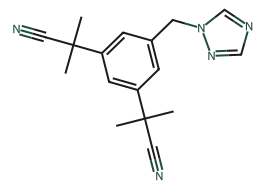
2D structure · PubChem record, redrawn
Dose ranges
Study-backed ranges carry a source you can open. Community ranges are widely reported but not clinically established - treat them as what people do, not as advice.
FDA-APPROVED indication - postmenopausal hormone-receptor-positive breast cancer (adjuvant, advanced, or first-line). This is the ONLY approved use; oral tablet.
study1 mg
once daily, oral
Community TRT-adjacent use to blunt estradiol from testosterone aromatization (OFF-LABEL, not approved, not studied for this). Doses used are far smaller than the 1 mg cancer dose because the goal is trimming - NOT crushing - estradiol. Reference-only; see the do-not-over-suppress caution below.
community0.25-0.5 (self-reported; some use up to 1 mg per week total, split across doses) mg
once or twice a week - self-reported practice, not a validated protocol
Storage
Reconstituted
Oral tablet, not reconstituted. Per the ARIMIDEX label, store at controlled room temperature, 20 to 25 C (68 to 77 F). Keep in the original container, away from heat, light, and moisture, and out of reach of children.
An oral compound - no vial, no reconstitution.
Tools for Anastrozole
Stacks and pairings
Interactions & cautions
Anastrozole is an aromatase inhibitor: it blocks the aromatase enzyme that converts androgens (including testosterone) into estradiol, so it lowers circulating estradiol. Per the ARIMIDEX label, the 1 mg dose cut serum estradiol by roughly 70% within 24 hours and roughly 80% after 14 days (DailyMed). In the TRT world it is used off-label to manage the estradiol rise that comes from aromatizing injected testosterone. The central caution is that estradiol is NOT a waste product in men - it is essential. Estradiol maintains male bone density, supports libido and erectile function, and helps keep lipids in a healthy range, so over-suppressing it causes real harm. A controlled study in healthy men that used anastrozole to selectively lower estradiol found that falling estradiol drove up body fat and that estradiol (alongside testosterone) was needed to maintain normal libido and erectile function (Finkelstein 2013, NEJM). A companion analysis found that suppressing estradiol increased bone resorption and lowered bone mineral density independent of testosterone, with serum estradiol below about 10 pg/mL flagged as undesirable for bone health (Finkelstein 2016, JCI). Consistent with its estrogen-lowering action, the breast-cancer label itself reports decreased lumbar spine and total hip bone mineral density and more elevated serum cholesterol on anastrozole versus tamoxifen (DailyMed). Because of the long ~50 hour half-life, dose changes take days to fully show up in estradiol, which makes over-shooting easy. Not for use in women who are or may be pregnant. This is a log-and-reference library, not medical advice - decisions about whether an AI is appropriate, and any estradiol testing, belong with a supervising clinician.
Questions people ask
Should everyone on TRT take an aromatase inhibitor?
No - and this is the point to sit with. Anastrozole has no approved role in TRT at all; the only approved use is breast cancer. Many men on a sensible testosterone dose keep estradiol in a healthy range on their own and never need an AI. Estradiol is essential in men: it maintains bone density, libido, erectile function, and lipids, so routinely knocking it down can cause more problems than it solves. In a controlled study that used anastrozole to lower estradiol in healthy men, falling estradiol raised body fat and worsened sexual desire and erectile function (Finkelstein 2013, NEJM), and estradiol below about 10 pg/mL was tied to bone loss (Finkelstein 2016, JCI). This is reference information, not advice - whether an AI is ever appropriate is a decision for a supervising clinician, ideally guided by symptoms and testing rather than a number alone.
What happens if estradiol is pushed too low?
Over-suppressed estradiol in men is linked to joint pain, low or absent libido, erectile trouble, low mood, worse cholesterol, and loss of bone density. The breast-cancer label for anastrozole itself reports decreased lumbar spine and total hip bone mineral density and more elevated cholesterol versus tamoxifen (DailyMed). In men specifically, suppressing estradiol with anastrozole increased body fat and hurt sexual function (Finkelstein 2013, NEJM) and raised bone resorption independent of testosterone (Finkelstein 2016, JCI). The takeaway across these sources is the same: a very low estradiol is a harm to avoid, not a target to chase.
How does anastrozole actually lower estrogen?
It blocks aromatase, the enzyme that converts androgens like testosterone into estradiol. Per the ARIMIDEX label, the 1 mg dose lowered serum estradiol by roughly 70% within 24 hours and roughly 80% after two weeks (DailyMed). Because it acts on the enzyme rather than replacing anything, the effect is dose-dependent - which is exactly why over-dosing can drive estradiol below the healthy range.
Why does the long half-life matter?
Anastrozole's mean elimination half-life is about 50 hours (DailyMed), so a single dose keeps suppressing aromatase for days and changes you make take days to fully register in blood estradiol. That lag is a big reason over-suppression happens: someone raises the dose before the previous one has fully landed, then ends up too low. It is also why the off-label community doses used on TRT are a fraction of the 1 mg cancer dose and are spaced out rather than taken daily.
Is anastrozole approved for men on TRT?
No. The only FDA-approved use is hormone-receptor-positive breast cancer in postmenopausal women, at 1 mg once daily (DailyMed). Any use to manage estradiol in men on testosterone is off-label and has not been approved or established for that purpose. Pepteca logs this use for reference; it does not recommend it.
Sources
- [1]ARIMIDEX (anastrozole) tablet - DailyMed labellabelAnastrozole is a selective non-steroidal aromatase inhibitor; only approved indication is postmenopausal hormone-receptor-positive breast cancer at one 1 mg tablet once daily; mean elimination half-life is 50 hours; store at controlled room temperature 20-25 C (68-77 F); the 1 mg dose reduced estradiol by ~70% within 24 hours and ~80% after 14 days by inhibiting aromatase (conversion of adrenal androgens to estrone and estradiol); patients had a mean decrease in lumbar spine and total hip bone mineral density versus baseline, and more patients had elevated serum cholesterol versus tamoxifen (9% vs 3.5%).
- [2]Gonadal Steroids and Body Composition, Strength, and Sexual Function in Men (Finkelstein et al., 2013) PMID 24024838studyRandomized trial in healthy men that used anastrozole to selectively suppress the conversion of testosterone to estradiol; increases in body fat were driven primarily by estradiol deficiency rather than testosterone deficiency, and both androgens and estrogens contributed to maintaining normal libido and erectile function - directly supporting that over-suppressing estradiol in men harms body composition and sexual function.
- [3]Gonadal steroid-dependent effects on bone turnover and bone mineral density in men (Finkelstein et al., 2016) PMID 26901812studyCompanion analysis in healthy men using aromatase inhibition (anastrozole): suppressing estradiol increased bone resorption (C-telopeptide) and decreased bone mineral density independent of testosterone level, with serum estradiol below about 10 pg/mL flagged as undesirable for bone health - supporting that crushing estradiol in men causes bone loss.
What we could not verify
Regulatory status: anastrozole has NO FDA-approved use in men or for TRT. Its only approved indication is postmenopausal hormone-receptor-positive breast cancer (1 mg once daily). All TRT-context use (managing estradiol from testosterone aromatization) is off-label and not established by controlled trials for that purpose. The community 0.25-0.5 mg once or twice weekly figures reflect self-reported TRT-community practice, not an approved, validated, or dose-finding-studied protocol, and are logged for reference only - not recommended. The men-specific harms of low estradiol (joint pain, low libido, erectile dysfunction, bone loss, worse lipids) are anchored to real controlled data: the Finkelstein 2013 NEJM trial and its 2016 JCI bone companion both used anastrozole to lower estradiol in healthy men and are cited directly here; the bone-density and cholesterol effects are additionally drawn from the anastrozole breast-cancer label. The specific dose-response and long-term safety of low-dose anastrozole in men on TRT has not been established. Whether an aromatase inhibitor is ever appropriate, and any estradiol testing or monitoring, is a clinical decision outside the scope of this reference entry.
Keep reading
Pepteca is for education and information only. It does not provide medical advice, diagnosis, or treatment, and its calculators perform unit math only. Always verify with a licensed provider before starting, changing, or stopping any protocol. Many peptides are not approved for human use and may be regulated differently where you live.