cat. no. BPC-157
BPC-157: dosage, half-life and storage
Synthetic pentadecapeptide (15 amino acids), a stable fragment based on a protein found in gastric juice
also: Body Protection Compound-157 / PL 14736 / Bepecin / Pentadecapeptide BPC 157
By An NayalLast reviewed 7 sources
At a glance
On this card (8)
What it is
BPC-157 is a lab-made chain of 15 amino acids based on a protective compound found in human stomach juice - which is why it survives stomach acid for over 24 hours, unusual for a peptide. In animal studies it appears to help injured tissue heal by boosting nitric oxide signaling and VEGF (a growth factor that builds new blood vessels) while calming inflammation. It has been tested in rats and dogs for tendon, ligament, muscle, gut, and nerve injuries with consistently positive results and no identified toxic dose. The catch: almost all of this evidence is preclinical, not human. Human evidence is thin - a 2015 Phase I trial was never completed and published. It is not FDA-approved and is banned for competitive athletes by WADA. People using it outside a study are working from animal data and community experience, not an established human dose.
The molecule
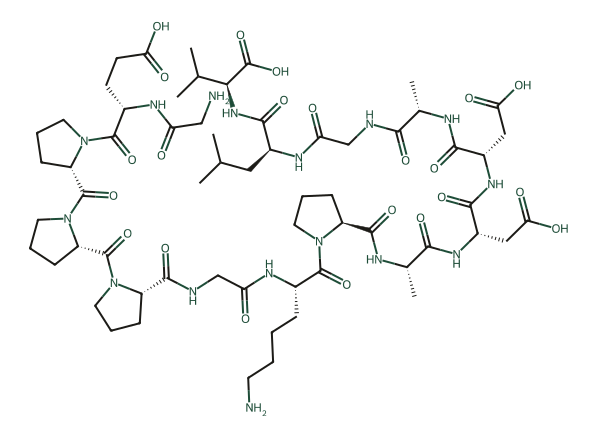
2D structure · PubChem record, redrawn
Dose ranges
Study-backed ranges carry a source you can open. Community ranges are widely reported but not clinically established - treat them as what people do, not as advice.
Preclinical PK dosing - rat (IV/IM, single dose)
study20-500 mcg/kg
single dose
Rat muscle-injury model, intraperitoneal
study10 mcg/kg/day
daily for 13 days
Dog subchronic toxicity study, intramuscular (no adverse effects vs saline)
study100-500 mcg/kg/day
daily for 28 days
General joint/tendon support - community-reported human self-dosing
community250-500 mcg
once or twice daily, subcutaneous or oral
Muscle recovery - community-reported human self-dosing
community250-750 mcg
daily
Reconstitution & storage
Vendor convention, not a manufacturer standard - no FDA-approved BPC-157 product exists. Common charts list 2 mL bacteriostatic water for 5-10 mg vials (2.5-5 mg/mL) and 3 mL for larger vials. Let the vial reach room temperature, inject the water slowly down the inside wall, and swirl gently rather than shaking.
Lyophilized
Vendor/community guidance: keep sealed unmixed powder at -20C or colder for longest stability (~24+ months), or refrigerated 2-8C short-term. Keep dark, dry, sealed.
Reconstituted
Vendor/community guidance: refrigerate at 2-8C after mixing; commonly cited stability up to ~28 days. Discard if it turns cloudy or changes color. No FDA-backed shelf life exists.
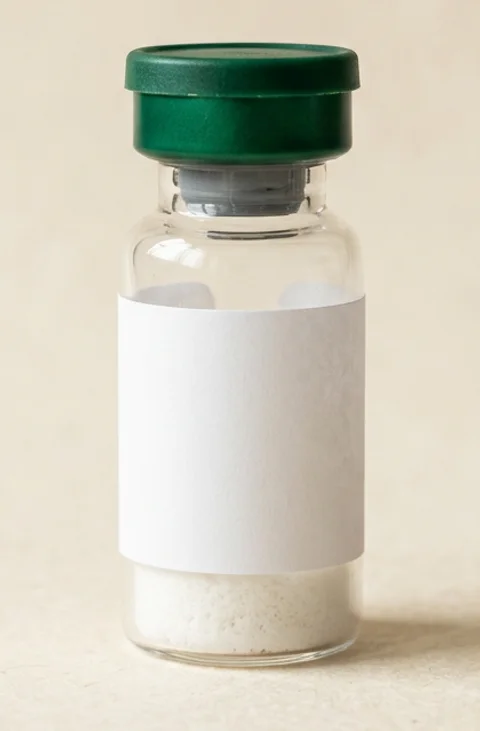
Ships as a white lyophilized powder cake in a 3 mL glass vial (5, 10, 20 mg sizes are typical), reconstituted with bacteriostatic water before use.
Run the numbers in the calculatorStacks and pairings
Interactions & cautions
No human drug-interaction studies exist - what follows is animal data plus community caution, not clinical guidance. In rats, BPC-157 counteracted the bleeding effects of heparin and warfarin, which shows it clearly interacts with clotting pathways; anyone on an anticoagulant or antiplatelet drug should talk to a doctor before combining. Preclinical reviews raise two theoretical concerns: an effect on nitric oxide signaling that could touch drugs metabolized via cytochrome P450, and pro-angiogenic (blood-vessel-building) activity that is a theoretical concern for anyone with active cancer or a cancer history. BPC-157 can cause injection-site pain in plain aqueous solution. It is not FDA-approved, so there is no official interaction list to defer to.
Questions people ask
Is BPC-157 legal to buy and use?
It sits in a gray area. The FDA has not approved it and has cautioned against compounded BPC-157 products. It is banned for competitive athletes under WADA's S0 category and is on the US Department of Defense prohibited supplement list. It is typically sold labeled as a research chemical, not for human consumption.
Does BPC-157 actually work, or is it just hype?
The animal evidence (rats and dogs) is genuinely extensive and consistently positive across tendon, muscle, gut, and nerve-injury models, with no toxic dose identified. Human evidence is much thinner - a 2015 Phase I trial was never completed, and most human-relevant data is a small case series. Treat the animal results as promising, not proof it works the same in people.
Why does the short half-life matter if people dose once or twice a day?
BPC-157's plasma half-life is under 30 minutes in animals, but its biological effects last far longer than it stays measurable in blood. A 2026 review flagged this mismatch, which is part of why community protocols favor small, frequent doses rather than assuming one dose covers a full day.
Can I combine BPC-157 with blood thinners?
Be cautious and talk to a doctor first. Rat studies show BPC-157 directly interacts with the clotting pathways affected by heparin and warfarin. No human interaction studies exist, so there is no clinically established answer - just a documented reason for caution.
Sources
- [1]Pharmacokinetics, distribution, metabolism, and excretion of BPC 157 in rats and dogs PMID 36588717studyBPC-157 plasma elimination half-life is under 30 minutes in both rats and dogs across IV and IM routes, with linear pharmacokinetics at all doses tested.
- [2]Multifunctionality and Possible Medical Application of the BPC 157 Peptide - Literature and Patent Review PMID 40005999reviewCompiles preclinical dose ranges (10 mcg/kg/day rat muscle-injury; 100-500 mcg/kg/day 28-day dog toxicity study with no adverse effects), notes injection-site pain in plain aqueous solution, and confirms a 2015 human Phase I trial was cancelled before publication.
- [3]The Stable Gastric Pentadecapeptide BPC 157: Pleiotropic Activity and Neurotransmitter RelationsreviewDescribes BPC-157's proposed mechanism through VEGF and nitric-oxide signaling and its modulation of dopamine and serotonin systems across animal models.
- [4]Pentadecapeptide BPC 157 Reduces Bleeding and Thrombocytopenia in Rats Treated with Heparin and WarfarinstudyIn rats, BPC-157 (10 mcg/kg or 10 ng/kg) counteracted heparin- and warfarin-induced bleeding and thrombocytopenia, demonstrating a direct interaction with anticoagulant drug effects.
- [5]BPC-157: A Prohibited Peptide and an Unapproved Drug (Operation Supplement Safety, DoD)regulatoryConfirms BPC-157 is on WADA's S0 prohibited list and the US DoD prohibited supplement list, and that the FDA has cautioned against compounded BPC-157 products due to safety and contamination risks.
- [6]How to Reconstitute BPC-157: BAC Water Chart (community guide)communityVendor reconstitution chart: 2 mL bacteriostatic water for 5-10 mg vials (2.5-5 mg/mL) and 3 mL for larger vials.
- [7]BPC-157 Dosage Guide (community)communityReports commonly discussed human self-dosing of 200-750 mcg/day depending on goal, with typical cycle lengths of 2-8 weeks.
What we could not verify
examine.com and DrugBank both returned 403 and are not cited. The widely-reported April 2026 FDA compounding-category change could not be confirmed against fda.gov directly (404s), so it was deliberately left out rather than sourced secondhand. Two PMC reviews are cited by PMC URL with pubmed_id left blank to avoid guessing a wrong PMID. Reconstitution and storage figures are vendor/community, not manufacturer or clinical. All community dose ranges reflect what peptide-dosing sites report people do, not a clinically established protocol. No confirmed human half-life exists; all PK figures are animal-only.
Keep reading
Pepteca is for education and information only. It does not provide medical advice, diagnosis, or treatment, and its calculators perform unit math only. Always verify with a licensed provider before starting, changing, or stopping any protocol. Many peptides are not approved for human use and may be regulated differently where you live.