cat. no. SEMAX
Semax: dosage, half-life and storage
Synthetic heptapeptide analog of ACTH(4-10) (Met-Glu-His-Phe-Pro-Gly-Pro), a nootropic and neuroprotective peptide administered intranasally; approved for clinical use in Russia but not FDA- or EMA-approved.
also: ACTH(4-10) analog / Semax Nasal / Mts-Glu-His-Phe-Pro-Gly-Pro
By An NayalLast reviewed 14 sources
At a glance
On this card (8)
What it is
Semax is a synthetic seven-amino-acid peptide built from a small fragment of ACTH (the pituitary hormone that stimulates the adrenal glands), modified so it retains ACTH's effects on the brain without its hormonal (steroid-stimulating) activity. It was developed in Russia in the 1980s and has been used there since the 1990s as a prescription intranasal drug for ischemic stroke recovery, certain cognitive disorders, and optic nerve disease. It is not approved by the FDA or EMA and is not available as an approved drug in the United States or Europe; there it exists only as an unregulated research chemical sold by peptide vendors. Animal and cell studies show Semax increases BDNF and NGF (proteins that support neuron survival and growth) in the brain, and a Russian human clinical study of post-stroke patients found that Semax raised blood BDNF levels alongside better recovery scores. The peptide is degraded very quickly in the body, within minutes, so its behavioral effects likely outlast its physical presence. Most of the supporting evidence comes from Russian-language research connected to its original development group, so independent Western replication is limited, and no rigorous modern human pharmacokinetic study has been published.
The molecule
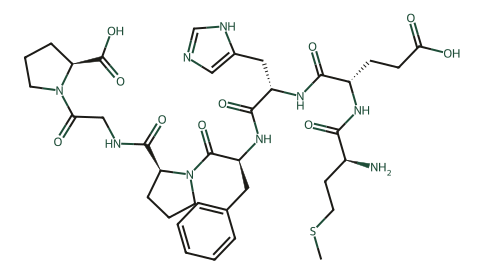
2D structure · PubChem record, redrawn
Dose ranges
Study-backed ranges carry a source you can open. Community ranges are widely reported but not clinically established - treat them as what people do, not as advice.
Post-ischemic-stroke rehabilitation (Russian clinical trial protocol)
study6000 (6 mg) mcg/day, in two 10-day courses separated by a 20-day interval
daily during each 10-day course
General nootropic use (Western online community, intranasal)
community200-600 mcg/day
1-2 times daily
Acute ischemic stroke (Russian clinical use; Semax is registered for this indication in Russia)
study12-18 mg/day intranasal
12 mg/day for moderate and 18 mg/day for severe stroke in Russian clinical studies (Gusev 1997)
Storage
Lyophilized
Community sources describe unopened lyophilized/bulk peptide as stable stored frozen (around -20C), protected from light and moisture. No peer-reviewed source specifying shelf-stability data at room temperature was located.
Reconstituted
Prepared intranasal drop/spray solutions are commonly described by community and vendor sources as refrigerated (2-8C) and used within a limited number of weeks; this is standard peptide-solution handling advice rather than a manufacturer-verified stability study.
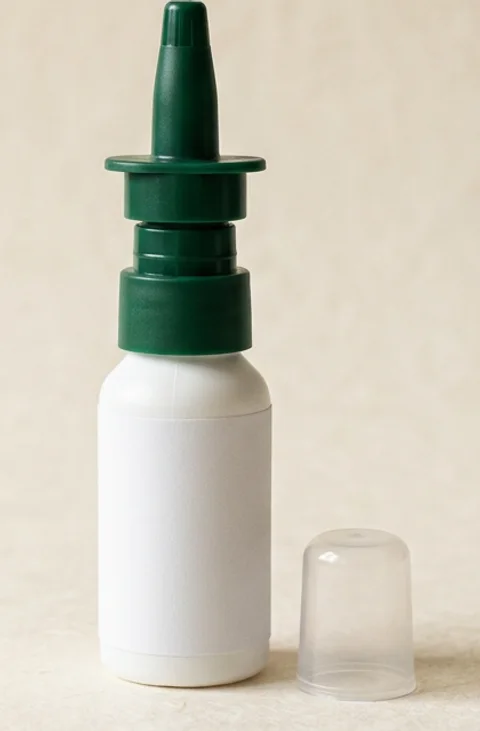
Most often sold as a nasal spray; lyophilized vials for reconstitution also exist.
Run the numbers in the calculatorStacks and pairings
Interactions & cautions
No formal human drug-interaction studies were located. The clearest sourced signal is preclinical: in rodents, Semax markedly potentiated D-amphetamine's effect on extracellular striatal dopamine and locomotor activity, and increased striatal serotonin turnover on its own (Eremin et al., 2005, Neurochem Res). This suggests a plausible mechanistic basis for caution when combining Semax with dopaminergic/serotonergic stimulant drugs, but this has not been studied in humans or in combination with specific medications (e.g., SSRIs, MAOIs, stimulants), so no specific human interaction can be stated as established.
Questions people ask
Is Semax FDA-approved?
No. Semax has no FDA or EMA approval. DailyMed (the U.S. FDA label database) returns no results for Semax. It has been an approved prescription drug in Russia since 1994 for indications including ischemic stroke recovery, cognitive impairment, and optic nerve disease, but that approval does not extend to the U.S. or EU.
How is Semax typically administered?
Overwhelmingly by the intranasal route (drops or spray), which is how it has been studied in both Russian clinical trials and animal pharmacology studies. It is not typically injected or taken orally.
What is the strongest clinical evidence for Semax?
A Russian trial of 110 post-ischemic-stroke patients (Gusev et al., 2018, Zh Nevrol Psikhiatr) found that a Semax regimen (6 mg/day for two 10-day courses) raised plasma BDNF levels and was associated with better functional (Barthel index) outcomes. This is a real published study but is a single Russian-language trial, not an FDA-reviewed pivotal trial.
Does Semax interact with other nootropics or stimulants?
No human interaction studies exist. A rodent study found Semax substantially potentiated the dopamine-releasing and locomotor-stimulating effects of D-amphetamine, which is a mechanistic reason for caution when combining Semax with stimulant or serotonergic drugs, though this has not been confirmed in humans.
Is Semax the same as Selank?
No, they are related but distinct Russian-developed peptides from the same research tradition (both intranasal, both studied for nootropic/anxiolytic effects), with Selank derived from tuftsin rather than ACTH. They should not be treated as interchangeable.
Sources
- [1]Semax, an ACTH(4-10) analogue with nootropic properties, activates dopaminergic and serotoninergic brain systems in rodents PMID 16362768studySemax increases striatal serotonin metabolite levels and dramatically potentiates D-amphetamine-induced dopamine release/locomotor activity in rodents; basis for the interaction caution note.
- [2]Semax, an analog of ACTH(4-10) with cognitive effects, regulates BDNF and trkB expression in the rat hippocampus PMID 16996037studyIntranasal Semax (50 mcg/kg) increases hippocampal BDNF protein and trkB activation in rats and improves avoidance learning; supports the BDNF-mechanism claims in the overview.
- [3]Semax and Pro-Gly-Pro activate the transcription of neurotrophins and their receptor genes after cerebral ischemia PMID 19633950studySemax and its active metabolite Pro-Gly-Pro upregulate neurotrophin/neurotrophin-receptor gene transcription in rat cortex after induced stroke; supports the neuroprotective mechanism claims.
- [4]The peptide semax affects the expression of genes related to the immune and vascular systems in rat brain focal ischemia: genome-wide transcriptional analysis PMID 24661604studyGenome-wide analysis showing Semax predominantly modulates immune-response and vascular genes after focal cerebral ischemia in rats; supports the mechanistic/neuroprotective evidence base.
- [5]Semax, an analog of ACTH(4-7), regulates expression of immune response genes during ischemic brain injury in rats PMID 28255762studyFurther genome-wide evidence that Semax and its PGP fragment act through distinct neuroimmune gene-expression pathways after ischemic brain injury in rats.
- [6]Comparative study of analgesic potency of ACTH4-10 fragment and its analog semax PMID 18018999studySemax (0.015-0.500 mg/kg) shows analgesic activity across its full tested dose range in rodent pain models, unlike the parent ACTH(4-10) fragment; preclinical dose-response data.
- [7]Kinetics of Semax penetration into the brain and blood of rats after its intranasal administration PMID 16523722studyRadiolabeled Semax reaches rat brain within 2 minutes of intranasal dosing and is rapidly metabolized, with Pro-Gly-Pro becoming the predominant species; basis for the short-half-life / rapid-degradation statement.
- [8]The efficacy of semax in the treatment of patients at different stages of ischemic stroke PMID 29798983studyRussian trial of 110 post-stroke patients: Semax (6 mg/day, two 10-day courses) raised plasma BDNF and was associated with improved Barthel index recovery scores; source for the clinical dose range and Russian clinical-use claim.
- [9]Evaluation of therapeutic effect of new Russian drug semax in optic nerve disease PMID 10741256studyRussian clinical study finding intranasal Semax improved visual acuity, visual field, and optic nerve conductivity when added to therapy for optic nerve disease; source for the optic-nerve indication and confirms it is described as a 'Russian drug'.
- [10]A New Generation of Drugs: Synthetic Peptides Based on Natural Regulatory PeptidesreviewReview by the Semax development group (Kolomin, Myasoedov et al.) characterizing Semax as a synthetic regulatory peptide effective in stroke therapy, composed only of natural amino acids; general background/overview source.
- [11]DailyMed drug label search: 'semax'regulatoryConfirms zero FDA drug label results for Semax, i.e. no FDA-approved product exists; basis for the 'not FDA-approved' statement.
- [12]PubChem Compound Summary for CID 9811102 (Semax / ACTH(4-7)-PGP)referenceChemical identity reference (molecular formula C37H51N9O10S) for Semax.
- [13]Semax peptide overview and dosing/storage guidance (community reference site)communityCommunity-reported intranasal dosing range (200-600 mcg/day) and community storage guidance (frozen powder, refrigerated prepared solution); explicitly labeled community, not clinical evidence.
- [14]Efficacy of Semax in acute ischaemic stroke (Gusev EI, Skvortsova VI, et al., 1997) PMID 11517472studyRussian clinical study of intranasal Semax in acute ischemic stroke reporting that the most effective daily doses were 12 mg for strokes of moderate severity and 18 mg for severe strokes.
What we could not verify
No confirmed modern human pharmacokinetic study establishing an exact plasma half-life for Semax was located; the 'minutes' figure rests on 1980s-2000s Russian animal biodistribution/degradation data (Shevchenko et al., 2006), not a direct human measurement, and widely repeated online figures like '2-8 minutes' or '>1 hour' could not be traced to a source I could personally verify, so they are omitted. A frequently repeated claim that Russian stroke dosing used '12 mg/day for moderate stroke and 18 mg/day for severe stroke' appears on multiple vendor/community pages but I could not trace it to a primary source I could open and verify, so it is excluded; only the Gusev et al. 2018 6 mg/day regimen is reported here as study-sourced. Exact shelf-life/stability data (in months, at stated temperatures) for lyophilized or reconstituted Semax could not be found in any peer-reviewed or manufacturer source; storage guidance here is community-level only. The related compound 'N-Acetyl Semax' (sold by some vendors as a longer-acting analog) was not independently researched for this page and no claims about it are made. All Western community/nootropic-forum claims about mood, anxiety, focus, or ADHD benefits are excluded here because they could not be traced to any study source; only Russian peer-reviewed/clinical indications (stroke recovery, optic nerve disease) and mechanistic animal/cell data are reported as study-sourced. Regulatory approval date (1994) and inclusion on Russia's Vital & Essential Drugs list (2011) are repeated across multiple community sources but I was not able to open a primary Russian regulatory registry source to verify them directly, so they are described in the overview only qualitatively ('approved and used in Russia since the 1990s') rather than asserted with the specific year/date as a study-backed fact.
Keep reading
Pepteca is for education and information only. It does not provide medical advice, diagnosis, or treatment, and its calculators perform unit math only. Always verify with a licensed provider before starting, changing, or stopping any protocol. Many peptides are not approved for human use and may be regulated differently where you live.