cat. no. SELANK
Selank: dosage, half-life and storage
Synthetic heptapeptide analog of the immune peptide tuftsin; anxiolytic and nootropic neuropeptide, used clinically only by the intranasal route
also: TP-7 / Selank acetate / Thr-Lys-Pro-Arg-Pro-Gly-Pro
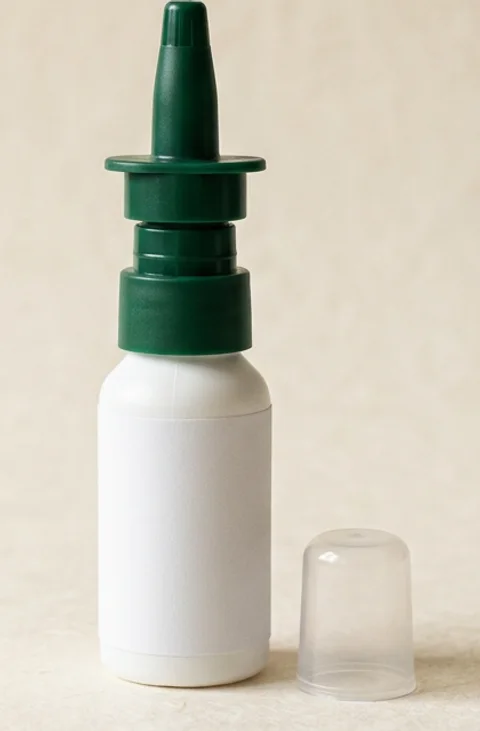
By An NayalLast reviewed 11 sources
At a glance
On this card (8)
What it is
Selank is a synthetic seven-amino-acid peptide (Thr-Lys-Pro-Arg-Pro-Gly-Pro) built on the natural immune peptide tuftsin, developed in Russia at the Institute of Molecular Genetics as an anxiolytic and nootropic. It has been a prescription drug in Russia, marketed as a 0.15 percent nasal drop/spray, used for generalized anxiety disorder, neurasthenia, and stress-related conditions, but it has never been evaluated or approved by the FDA or EMA, and no trials are registered on ClinicalTrials.gov. The human clinical evidence is thin by Western standards: the main trial we could verify is a small, 62-patient Russian comparator study against the benzodiazepine medazepam, finding comparable anxiolytic benefit. Animal studies in rats and mice suggest Selank reduces anxiety-like behavior, inhibits enkephalin-degrading enzymes, positively modulates GABA-A receptors, and affects hippocampal BDNF levels; a small human fMRI study found it altered amygdala functional connectivity. Selank's own pharmacokinetic half-life in humans has not been established in any peer-reviewed source we could open; widely repeated minute-scale figures online are unsourced vendor claims. Outside Russia, Selank is used informally as an intranasal research/nootropic peptide, a use that is community-driven rather than clinically established.
The molecule
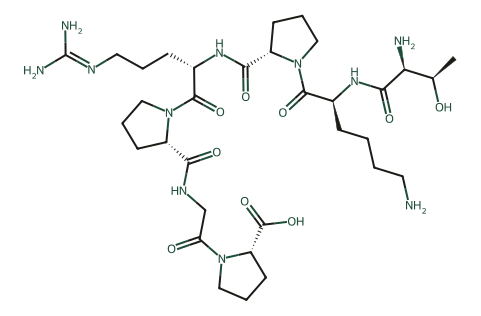
2D structure · PubChem record, redrawn
Dose ranges
Study-backed ranges carry a source you can open. Community ranges are widely reported but not clinically established - treat them as what people do, not as advice.
Anxiolytic effect in ethanol-withdrawal model (rat, intraperitoneal, single dose)
study0.3 mg/kg
single injection
Memory/BDNF protection in chronic ethanol model (rat, intraperitoneal)
study0.3 mg/kg/day
once daily for 7 days
Anxiolytic effect in open-field test (mouse, BALB/c strain only; no effect seen in C57Bl/6 mice)
study100 mcg/kg
single dose
Community-reported intranasal use in humans (not a clinically established regimen outside Russia)
community300-1000 mcg/day
divided into 2-3 intranasal doses/day; community-reported ~12-week course followed by a 4-week break
Storage
Lyophilized
Unopened powder or solution: community sources recommend refrigeration at 2-8 C (36-46 F), away from light; reported stability of roughly 1-2 years refrigerated versus about 6-12 months at room temperature. Do not freeze, as freezing is reported to damage the peptide structure. (community-sourced; no peer-reviewed stability data located)
Reconstituted
Opened intranasal spray/drops: keep refrigerated; community sources cite roughly 3-6 months of stability once opened. Discard if the solution becomes cloudy, develops particles, or smells unusual. (community-sourced)
Most often sold as a nasal spray; lyophilized vials for reconstitution also exist.
Run the numbers in the calculatorStacks and pairings
Interactions & cautions
Peer-reviewed data on Selank drug interactions are very limited. A rat study (Behav Neurol 2017, PMID 28280289) found that Selank combined with diazepam produced a stronger anxiolytic effect in the elevated plus maze than either compound alone under chronic mild stress. A separate radioligand-binding study (Protein Pept Lett 2018, PMID 30255741) reported that Selank acts as a positive allosteric modulator of GABA binding at GABA-A receptors and that co-administration with benzodiazepines produced non-cumulative (not simply additive) effects, with Selank able to block the modulatory activity of certain benzodiazepine-site ligands in vitro. No peer-reviewed human interaction studies were located, and no data on interactions with SSRIs, MAOIs, alcohol (outside of rat ethanol-withdrawal models), or other CNS depressants were found. Given the very small human clinical dataset, anyone combining Selank with other CNS-active medications should treat the interaction profile as essentially uncharacterized in humans.
Questions people ask
Is Selank FDA-approved?
No. Selank is a prescription anxiolytic in Russia (and reportedly Ukraine) but has not been evaluated or approved by the FDA or EMA, and we found no trials registered on ClinicalTrials.gov.
How is Selank typically administered?
In Russian clinical use, and in community/vendor use outside Russia, Selank is administered intranasally as drops or a spray, not by injection. This is why this page does not include an injectable reconstitution calculator.
What is Selank's half-life?
Not reliably established. No peer-reviewed source we could open reports a specific plasma half-life for Selank itself. Vendor and community pages cite figures ranging from under 10 minutes to 25-30 minutes, and these figures are inconsistent with each other and unsourced.
Does Selank interact with benzodiazepines like diazepam?
A rat study found that combining Selank with diazepam produced a stronger anxiolytic effect than either alone under chronic stress, and a separate binding study found Selank modulates the same GABA-A receptor site as benzodiazepines. This suggests a possible additive or interactive effect worth being aware of, though it has not been characterized as dangerous in the literature we reviewed, and no human interaction data exist.
Is Selank the same as Semax?
No, though the two are closely related and often discussed together. Both are short Russian-developed neuropeptides given intranasally and studied at the same institute, but Semax is derived from ACTH(4-7) and studied mainly as a cognitive/neuroprotective nootropic, while Selank is a tuftsin analog studied mainly as an anxiolytic. A 2020 human fMRI study directly compared their distinct effects on brain connectivity in the same 52 volunteers.
Sources
- [1]Efficacy and possible mechanisms of action of a new peptide anxiolytic selank in the therapy of generalized anxiety disorders and neurasthenia PMID 18454096studyClinical study of 62 patients with generalized anxiety disorder/neurasthenia comparing Selank (n=30) to medazepam (n=32); comparable anxiolytic effect, plus antiasthenic/psychostimulant action, correlated with blood enkephalin activity.
- [2]Peptide-based Anxiolytics: The Molecular Aspects of Heptapeptide Selank Biological Activity PMID 30255741studyRadioligand-binding review finding Selank acts as a positive allosteric modulator of [3H]GABA binding at GABA-A receptors, with non-cumulative interaction with benzodiazepines.
- [3]Efficacy of peptide anxiolytic selank during modeling of withdrawal syndrome in rats with stable alcoholic motivation PMID 24913576studyIn rats, a single intraperitoneal dose of Selank 0.3 mg/kg reduced anxiety-like behavior (elevated plus maze, social interaction) and prevented mechanical allodynia during ethanol withdrawal, without changing ethanol consumption.
- [4]Peptide Selank Enhances the Effect of Diazepam in Reducing Anxiety in Unpredictable Chronic Mild Stress Conditions in Rats PMID 28280289studyIn rats under chronic mild stress, Selank alone reduced anxiety in the elevated plus maze, and Selank combined with diazepam was more effective than either alone.
- [5]Selank, Peptide Analogue of Tuftsin, Protects Against Ethanol-Induced Memory Impairment by Regulating of BDNF Content in the Hippocampus and Prefrontal Cortex in Rats PMID 31625062studyIn aged rats, Selank 0.3 mg/kg/day intraperitoneally for 7 days improved object-recognition memory and normalized ethanol-induced changes in BDNF content in the hippocampus and prefrontal cortex.
- [6]Functional Connectomic Approach to Studying Selank and Semax Effects PMID 32342318studyResting-state fMRI study in 52 healthy human volunteers found Selank and Semax produced distinct changes in amygdala functional connectivity 5-20 minutes after dosing.
- [7]The inhibitory effect of Selank on enkephalin-degrading enzymes as a possible mechanism of its anxiolytic activity PMID 11550013studySelank dose-dependently inhibited plasma enkephalin-degrading enzyme activity in vitro (IC50 approximately 15 microM); GAD patients had shortened plasma enkephalin half-life versus controls, proposed as an anxiolytic mechanism.
- [8]Effects of Selank on behavioral reactions and activities of plasma enkephalin-degrading enzymes in mice with different phenotypes of emotional and stress reactions PMID 12432865studyIn BALB/c mice, Selank 100 mcg/kg produced an anxiolytic effect in the open-field test and extended plasma leu-enkephalin half-life; no behavioral or enzymatic effect was seen in C57Bl/6 mice, showing phenotype dependence.
- [9]PubChem Compound Summary for CID 11765600, SelankreferenceChemical identity: heptapeptide Thr-Lys-Pro-Arg-Pro-Gly-Pro, molecular formula C33H57N11O9, molecular weight 751.9 g/mol; synonyms include TP-7 and Selank acetate.
- [10]Selank Nasal Spray: Benefits, Dosage, and Side EffectscommunityCommunity-reported intranasal dosing: starting around 300 mcg/day, up to about 1000 mcg/day divided into 2-3 administrations, with cycles of roughly 12 weeks on and 4 weeks off; also claims Selank is undetectable in blood after about 10 minutes.
- [11]Selank Nasal Spray: Dosage, Benefits & How to UsecommunityCommunity-reported storage guidance: refrigerate at 2-8 C or keep at room temperature 68-77 F, do not freeze, roughly 1-2 years stability refrigerated vs 6-12 months at room temperature, about 3-6 months once opened.
What we could not verify
Could not verify: (1) Selank's own plasma/pharmacokinetic half-life in a peer-reviewed source - the two enkephalin-related studies we opened (PMID 11550013, 12432865) describe Selank extending the half-life of plasma leu-enkephalin (its enzymatic substrate/target), which is a distinct fact from Selank's own clearance rate; vendor sites cite half-life figures for Selank itself ranging from under 10 minutes to 25-30 minutes, and these are inconsistent and unsourced, so they are reported here only as community claims. (2) The exact human dose used in the 2008 GAD/neurasthenia clinical study (PMID 18454096) - the abstract we could access via Europe PMC did not state a specific mg/mcg dose or administration route, only patient counts and outcome measures; the original is a Russian-language journal article and we could not access Russian-language full text. (3) The precise marketed Russian formulation and regulatory status (commonly cited as '0.15% nasal drops,' approved since the 2000s) - this is repeated consistently across secondary/vendor sources but we could not open a primary Russian regulatory record (e.g., the Russian State Register of Medicines) to confirm it directly, so it is treated as community-sourced context rather than a study/regulatory citation. (4) No clinical trials for Selank were found registered on ClinicalTrials.gov. (5) PubMed's own abstract pages (pubmed.ncbi.nlm.nih.gov) returned only a cookie-consent wall on every fetch attempt and did not count as resolved; all corresponding abstracts were instead retrieved via the Europe PMC REST API (a mirror of the same PubMed-indexed records), which did resolve, and PMIDs were cross-checked against title/journal/year for consistency. (6) Reported intranasal bioavailability figures (e.g., '92.8%') and specific Pro-Gly-Pro-driven half-life extension claims seen in web searches came only from vendor pages we did not independently open and verify, so they are omitted from this record rather than included as unverified numbers. (7) No FDA regulatory-status detail beyond 'not FDA-approved' is included here: search results referenced a 2023-2024 FDA Category 2 compounding-list episode involving 'Selank acetate (TP-7),' but fda.gov pages returned HTTP 403 on direct fetch, so this specific regulatory history could not be independently confirmed and is omitted.
Keep reading
Pepteca is for education and information only. It does not provide medical advice, diagnosis, or treatment, and its calculators perform unit math only. Always verify with a licensed provider before starting, changing, or stopping any protocol. Many peptides are not approved for human use and may be regulated differently where you live.