cat. no. TIRZEPATIDE
Tirzepatide: dosage, half-life and storage
GLP-1/GIP dual receptor agonist (incretin mimetic peptide)
also: Mounjaro / Zepbound / LY3298176
By An NayalLast reviewed 8 sources
At a glance
On this card (7)
What it is
Tirzepatide is a once-weekly injectable peptide that mimics two gut hormones at the same time, GLP-1 and GIP, instead of just one like older drugs such as semaglutide (Ozempic/Wegovy). Both hormones normally get released after eating; activating both together tells the pancreas to release more insulin only when blood sugar is high, tells the liver to stop overproducing sugar, slows how fast food leaves the stomach, and turns down appetite signals in the brain. The result is lower blood sugar (its first FDA approval, as Mounjaro, for type 2 diabetes) and significant appetite reduction and weight loss (its second approval, as Zepbound, for chronic weight management and for obstructive sleep apnea with obesity). It only needs weekly dosing because a fatty-acid side chain lets it bind reversibly to albumin, the most common blood protein, which acts like a slow-release depot and keeps it active for days instead of hours.
The molecule
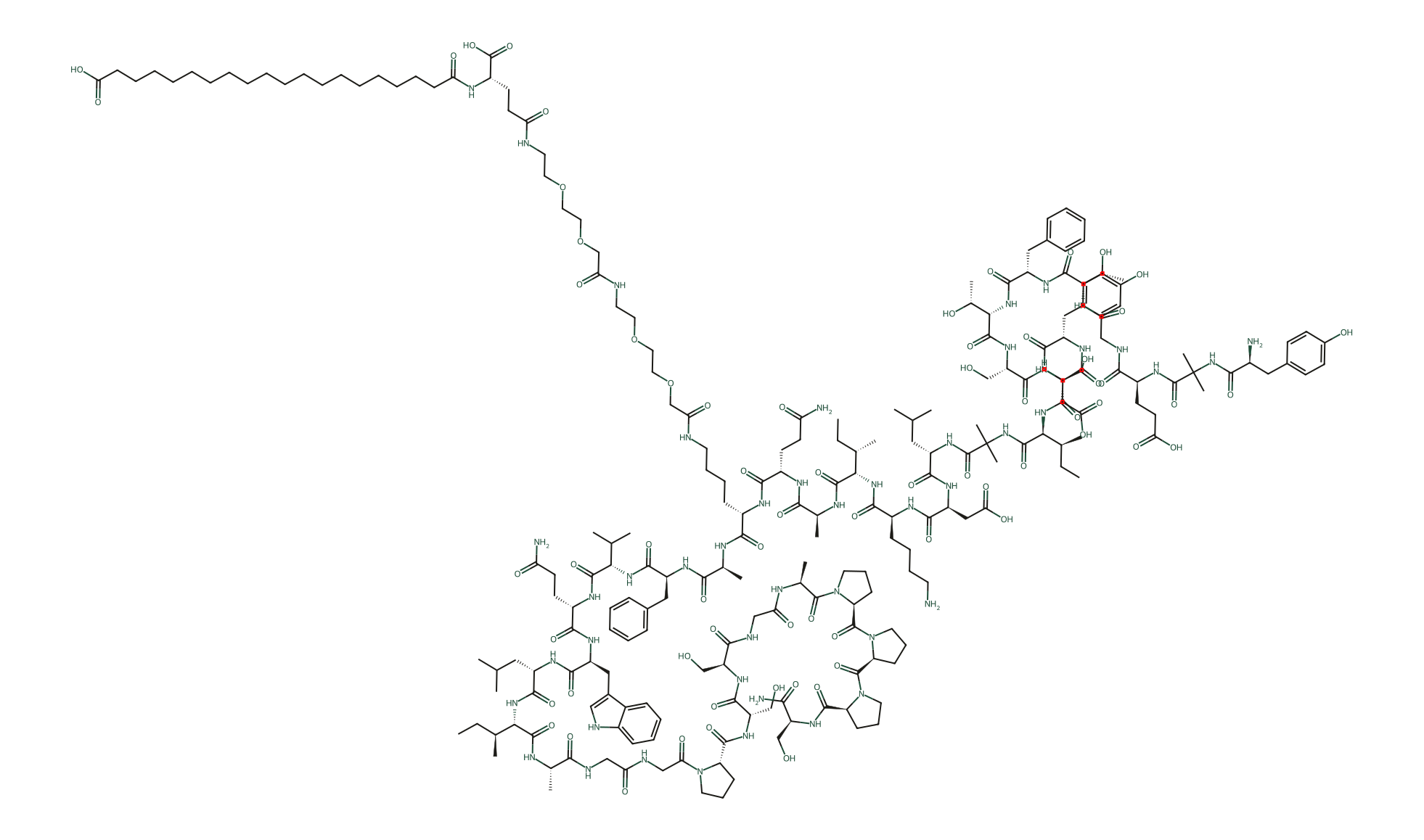
2D structure · PubChem record, redrawn
Amino-acid sequence
- * Positions 2 and 13: Aib (2-aminoisobutyric acid)
- * Position 20: Lys side-chain acylated via gamma-Glu and two AEEA linkers to a C20 fatty diacid
- * C-terminus amidated (Ser39-NH2)
Sequence per PubChem CID 166567236 - X marks a non-standard residue, detailed above.
Dose ranges
Study-backed ranges carry a source you can open. Community ranges are widely reported but not clinically established - treat them as what people do, not as advice.
Type 2 diabetes, adults (Mounjaro)
study2.5 (start, weeks 1-4, not for glycemic control) then increase in 2.5 mg increments every 4+ weeks up to 15 (max) mg
once weekly, subcutaneous
Type 2 diabetes, pediatric 10-17 years (Mounjaro)
study2.5 (start) then increase in 2.5 mg increments up to 10 (max) mg
once weekly, subcutaneous
Chronic weight management & moderate-to-severe obstructive sleep apnea with obesity, adults (Zepbound)
study2.5 (start, weeks 1-4, not an approved maintenance dose) then increase in 2.5 mg increments after at least 4 weeks per step up to 15 (max) mg
once weekly, subcutaneous
Community microdosing - sensitive responders, side-effect management, or step-down maintenance (off-label)
community0.5-2 mg
once weekly; raised every 6-12 weeks or held flat, far slower than the FDA 4-week titration
Reconstitution & storage
No FDA-approved tirzepatide vial exists for patient reconstitution - Mounjaro and Zepbound ship as ready-to-use pens/vials already in solution, never as a powder patients mix themselves. These figures reflect compounded/research-vial vendor and community practice only, not an approved product. Commonly documented ratios: 5 mg vial + 1 mL bacteriostatic water, 10 mg + 2 mL, 15 mg + 3 mL - all landing near 5 mg/mL. Reconstituted-with-bacteriostatic-water solution is commonly reported stable refrigerated up to 28 days; plain sterile (non-bacteriostatic) water is commonly limited to 24 hours. Always use bacteriostatic water made for injection, never tap or plain distilled water.
Lyophilized
FDA-approved Mounjaro and Zepbound ship as ready-to-use liquid, not lyophilized powder, so there is no FDA spec for powder storage. Compounded/research-labeled tirzepatide is commonly shipped as a lyophilized powder; vendor storage guidance for the unmixed powder was not independently verified in this research.
Reconstituted
Mounjaro/Zepbound pens or vials: refrigerate at 36-46F (2-8C) until use, or store unopened at room temperature up to 86F (30C) for a maximum of 21 days total, then discard; never freeze; keep in the original carton away from light; once warmed to room temperature, do not return it to the fridge. Compounded/research vials reconstituted with bacteriostatic water are commonly reported stable refrigerated up to 28 days; with plain sterile water, commonly limited to 24 hours.
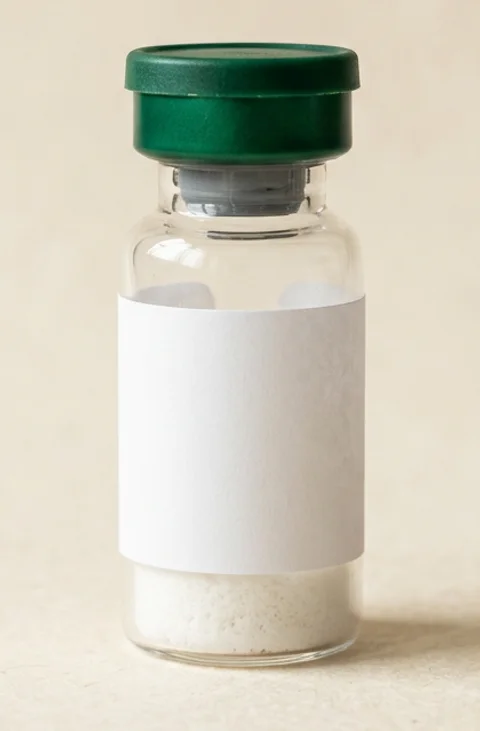
Ships as a white lyophilized powder cake in a 3 mL glass vial (5, 10, 15 mg sizes are typical), reconstituted with bacteriostatic water before use.
Run the numbers in the calculatorInteractions & cautions
Contraindicated with a personal or family history of medullary thyroid carcinoma (MTC) or Multiple Endocrine Neoplasia syndrome type 2 (MEN 2), based on dose- and duration-dependent thyroid C-cell tumors seen in rodents (human relevance unknown) - per the Mounjaro and Zepbound labels. Can cause acute pancreatitis, including fatal or hemorrhagic/necrotizing cases; discontinue and seek care for severe or persistent abdominal pain. Raises hypoglycemia risk when combined with insulin or an insulin secretagogue such as a sulfonylurea - the Zepbound label reports hypoglycemia in 10.3% of patients also taking a sulfonylurea versus 2.1% not taking one, and a lower dose of the other drug is often needed. Delays gastric emptying, which can slow or reduce absorption of other oral medications; the label specifically tells patients on oral hormonal contraceptives to switch to a non-oral method or add a barrier method for 4 weeks after starting and after each dose increase. Also linked to gallbladder disease (cholelithiasis/cholecystitis) and acute kidney injury risk from dehydration during severe GI side effects (nausea, vomiting, diarrhea).
Questions people ask
How is tirzepatide different from semaglutide (Ozempic/Wegovy)?
Semaglutide only activates the GLP-1 receptor; tirzepatide activates both GLP-1 and GIP receptors. In preclinical (animal) studies, that added GIP activity blunted nausea and vomiting compared to equivalent semaglutide doses without giving up appetite suppression - promising animal-model evidence, not a confirmed human mechanism study.
Can I take tirzepatide if thyroid cancer runs in my family?
No. Both Mounjaro and Zepbound are contraindicated in anyone with a personal or family history of medullary thyroid carcinoma (MTC) or Multiple Endocrine Neoplasia syndrome type 2 (MEN 2), per their FDA boxed warnings, based on thyroid C-cell tumors seen in rodent studies. Whether the same risk applies to humans is unknown.
Does tirzepatide cause low blood sugar (hypoglycemia)?
Rarely on its own, since it only boosts insulin release when blood sugar is already high. Risk climbs when combined with insulin or a sulfonylurea: the Zepbound label reports hypoglycemia in 10.3% of patients also taking a sulfonylurea, versus 2.1% of those who weren't, so prescribers often lower the dose of those other medications first.
How long can I leave my Mounjaro or Zepbound pen out of the fridge?
Up to 21 days total at room temperature (up to 86F/30C), after which it must be discarded even if it looks fine. Otherwise keep it refrigerated at 36-46F (2-8C), in its original carton away from light, and never frozen - and once it has been at room temperature, it should not go back in the fridge.
What is 'microdosing' tirzepatide, and is it FDA-approved?
Microdosing means using doses below the FDA's 2.5 mg starting dose, commonly 0.5 to 2 mg weekly, to reduce side effects, help sensitive responders, or maintain weight after reaching a goal. It is not FDA-approved, does not appear in the official prescribing information, and has no published phase 3 trial data behind it - what exists is telehealth practice experience and anecdotal reports, so it requires a prescriber's supervision.
Sources
- [1]MOUNJARO (tirzepatide) injection, solution - FDA Prescribing InformationlabelFDA-approved type 2 diabetes dosing: 2.5 mg/week starting dose (4 weeks, not for glycemic control), titrated in 2.5 mg increments to a 5-15 mg/week adult maintenance range (5-10 mg for ages 10-17); half-life approximately 5 days; contraindicated with personal/family MTC or MEN2 history; mechanism is combined GIP and GLP-1 receptor agonism; warns of pancreatitis and increased hypoglycemia risk with insulin or insulin secretagogues.
- [2]ZEPBOUND (tirzepatide) injection, solution - FDA Prescribing InformationlabelFDA-approved dosing for chronic weight management and moderate-to-severe obstructive sleep apnea with obesity: 2.5 mg/week for 4 weeks then 2.5 mg increments (at least 4 weeks apart) up to a 15 mg/week maximum; half-life approximately 5-6 days; hypoglycemia occurred in 10.3% of patients also on a sulfonylurea vs 2.1% not on one; delayed gastric emptying can reduce absorption of oral drugs including oral contraceptives, so patients are told to add a barrier method or switch to non-oral contraception for 4 weeks after starting or each dose increase; contraindicated with personal/family MTC or MEN2 history.
- [3]Tirzepatide - StatPearlsreviewDescribes tirzepatide as a 39-amino-acid synthetic dual GIP/GLP-1 receptor agonist peptide with ~5 day half-life, ~80% bioavailability, ~99% plasma protein binding, and peak levels at 8-72 hours; confirms MTC/MEN2 contraindication and pancreatitis, hypoglycemia, and gallbladder disease as key risks; notes off-label obesity-trial weight loss of 16.5-22.4% over 72 weeks in non-diabetic participants.
- [4]Hypophagia and body weight loss by tirzepatide are accompanied by fewer GI adverse events compared to semaglutide in preclinical modelsstudyPreclinical (rat and shrew) study finding tirzepatide's added GIP receptor agonism blocked emesis and reduced a nausea-proxy behavior (kaolin consumption) compared to equipotent semaglutide doses at similar appetite-suppressing effect - animal-model evidence, not a human clinical trial.
- [5]Mounjaro and refrigeration: Storage, expiration, and morepatient_educationStates Mounjaro pens must be refrigerated at 36-46F (2-8C), may be kept at room temperature up to 86F (30C) for a maximum of 21 days before disposal, should stay in the original carton to protect from light, and must never be frozen.
- [6]What to Know about Storing Zepbound Safelypatient_educationStates Zepbound pens/vials must be refrigerated at 36-46F (2-8C) or kept at room temperature (not exceeding 86F/30C) for a maximum of 21 days, protected from light in original packaging, never frozen, and not returned to the fridge once warmed to room temperature.
- [7]Tirzepatide Reconstitution: 5mg + 2mL ChartcommunityDocuments common compounded/research tirzepatide vial reconstitution ratios (5mg+1mL, 10mg+2mL, 15mg+3mL bacteriostatic water, each landing near 5 mg/mL), reports refrigerated stability up to 28 days after reconstitution with bacteriostatic water versus 24 hours with plain sterile water, and explicitly states these research/compounded forms are not FDA-approved.
- [8]Microdosing Tirzepatide: Chart, Schedule & Pros/ConscommunityDescribes community/off-label microdosing doses of 0.5-2 mg weekly (below the FDA 2.5 mg starting dose) used for side-effect management, sensitive responders, or step-down maintenance, explicitly stating it is not FDA-approved, not in official prescribing guidance, and unsupported by published phase 3 trials.
What we could not verify
Could not verify (403 Forbidden, not cited): Eli Lilly's own Zepbound vial Instructions for Use PDF (pi.lilly.com/us/zepbound-vial-us-ifu.pdf), GoodRx's Mounjaro and Zepbound storage pages, and a Drugs.com tirzepatide-vs-semaglutide comparison page - all blocked the fetch, so storage figures instead rely on Medical News Today and Healthline (both fetched successfully and consistent with each other on temperatures and the 21-day room-temperature rule). DrugBank appeared in search results but was never actually opened, so it is not cited. No independently verified source was found for lyophilized (pre-reconstitution) powder storage specific to compounded/research vials, or for a formal common-stacks list, so those are left blank/empty rather than guessed. The development code LY3298176 is corroborated by multiple independent real search results (ClinicalTrials.gov protocol documents, Cayman Chemical, MedKoo) but was not itself fetched as a dedicated citation, so it appears only in aliases, not in the citations list. No confirmed PubMed ID (PMID) was captured for the StatPearls or Science Advances entries, so both are cited by URL only with pubmed_id left blank rather than guessing a number. The Science Advances GI-tolerability finding is preclinical (rodent/shrew), not human data - flagged in its citation and in the related FAQ.
Keep reading
Pepteca is for education and information only. It does not provide medical advice, diagnosis, or treatment, and its calculators perform unit math only. Always verify with a licensed provider before starting, changing, or stopping any protocol. Many peptides are not approved for human use and may be regulated differently where you live.